

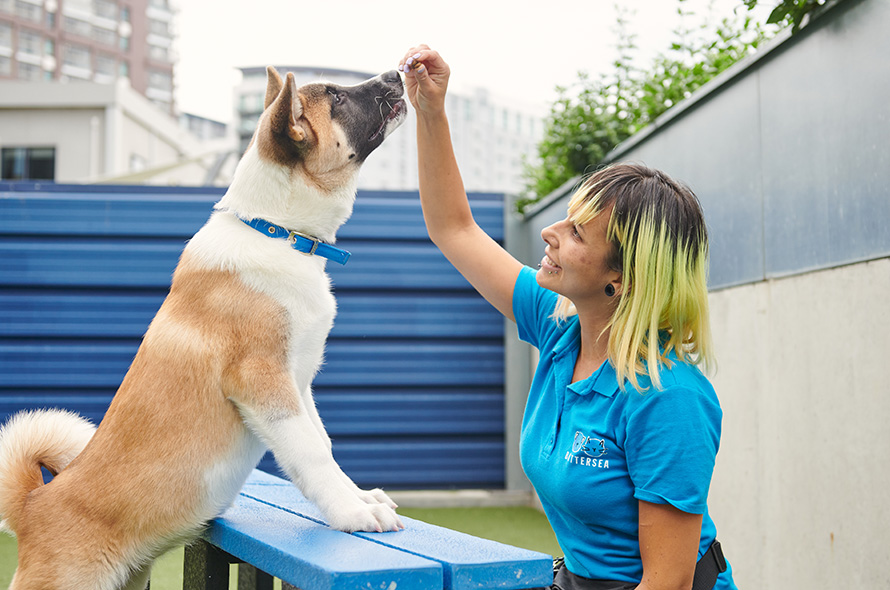
Finding a puppy trainer near me can feel simple until you start comparing training methods, programs, and promises. The right trainer should do more than teach your puppy to sit or stay. Early training should establish reliable habits, build confidence, improve communication, and prepare your puppy to behave appropriately in everyday situations.
A good puppy training program also considers the individual dog. Age, temperament, environment, learning style, and the behaviors you want to address can all influence how training should be approached. Rob’s Dog Training takes a personalized approach to help puppies develop practical obedience skills and better everyday behaviors.
Why Early Puppy Training Matters
Puppies are constantly learning from their surroundings. Every interaction can reinforce a behavior, whether you intentionally teach it or not.
Jumping on visitors, pulling toward distractions, barking for attention, chewing household items, or ignoring recall can become difficult habits when they are repeatedly practiced. Early guidance allows owners to establish clear expectations before unwanted behaviors become deeply established.
Puppy training can also provide a foundation for:
- Basic obedience and communication
- Leash manners
- Recall and responsiveness
- Crate training
- House training
- Calm greetings
- Focus around distractions
- Appropriate socialization
- Impulse control and patience
The goal is not to make a puppy behave perfectly overnight. The goal is to establish behaviors that can become dependable as the dog matures.
What Should a Puppy Trainer Near Me Teach?
When searching for a puppy trainer near me, look beyond a list of commands. Sit, down, stay, and come are useful skills, but your puppy also needs to understand how to behave when those commands are challenged by real-world distractions.
Obedience and Communication
A puppy should learn how to respond consistently to basic cues. However, obedience should eventually work beyond a quiet living room.
A puppy that sits perfectly at home but ignores the owner at a park has learned a behavior without learning how to apply it around distractions. Good training gradually introduces different environments and situations so the puppy learns to listen when something interesting is happening nearby.
Leash Manners
Leash training is another important early skill. Puppies naturally want to investigate everything around them, which can lead to pulling, stopping, jumping, or constantly changing direction.
Teaching appropriate leash behavior early can make walks more manageable while helping puppies learn that being connected to their owner does not mean they can move wherever they want.
House and Crate Training
House training depends heavily on management and consistency. Young puppies may not yet recognize when they need to eliminate, so owners must create predictable opportunities to go outside and prevent unnecessary accidents.
Rob’s Dogs recommends structured management, supervision, scheduled potty breaks, and positive reinforcement rather than punishing a puppy for accidents. Their guidance also emphasizes creating a consistent routine during the first weeks at home.
Crate training can also help establish a predictable routine when introduced appropriately. A crate should support management and rest rather than become a form of punishment.
Puppy Socialization Requires More Than Meeting Dogs
Socialization is frequently misunderstood. Some owners assume a well-socialized puppy meets as many dogs and people as possible.
Quality matters more than quantity.
A puppy needs opportunities to experience different sights, sounds, surfaces, environments, people, and situations in ways that are safe and manageable. The objective is to help the puppy develop confidence without overwhelming them.
Rob’s Dogs recommends carefully controlled social experiences and notes the importance of following veterinary vaccination guidance before exposing young puppies to environments where disease risks may be higher.
A thoughtful socialization plan can include experiences such as:
- Walking through different environments while maintaining appropriate control.
- Introducing household sounds and unfamiliar objects gradually.
- Meeting suitable people in calm settings.
- Introducing compatible dogs in controlled circumstances.
- Watching for signs of fear, stress, or overstimulation.
- Ending interactions before the puppy becomes overwhelmed.
A puppy does not need to greet every dog or person it encounters. Learning to remain calm and focused without interacting is an equally valuable skill.
Look for Real-World Puppy Training
One of the most important questions to ask a prospective trainer is where the training takes place.
Dogs do not live in training rooms. They encounter delivery workers, children, other dogs, traffic, bicycles, shopping centers, parks, visitors, and countless unfamiliar sounds and smells.
That is why real-world practice matters.
Rob’s Dogs states that private lessons may take place in public settings such as parks and shopping centers so dogs can practice obedience around distractions. The company also emphasizes teaching owners how to continue using the methods between lessons.
This approach addresses a common training problem: a puppy knows what to do but cannot perform the behavior when the environment becomes exciting.
Training should gradually move from easy situations to more challenging ones. As the puppy succeeds, distractions can become more difficult.
Ask How the Trainer Evaluates Your Puppy
Every puppy is different. A training program that works well for one dog may not be appropriate for another.
Before choosing a trainer, find out whether the professional evaluates your puppy’s behavior, temperament, existing habits, and specific challenges.
An assessment can help answer practical questions such as:
- What behaviors need immediate attention?
- What does the puppy already understand?
- How does the puppy respond to distractions?
- What training environment would be most appropriate?
- What does the owner need to practice at home?
- Which program best matches the family’s goals?
Rob’s Dogs offers an in-person behavioral assessment designed to observe the dog’s behavior, identify contributing factors, explain what may be causing the issues, and outline a customized training plan.
That type of evaluation can be more useful than choosing a program based solely on the number of sessions or commands advertised.
Private Puppy Lessons or Board and Train?
When searching for a puppy trainer near me, you may encounter several training formats. Two common options are private lessons and board and train.
Private lessons are particularly useful for owners who want to participate directly. The trainer works with the puppy while teaching the owner how to continue practicing between sessions. Rob’s Dogs describes its private lessons as one-on-one training customized around the dog’s needs and the owner’s goals.
Board and train programs provide a more immersive experience. The dog stays with professional trainers and receives structured training during the program. However, owner involvement still matters because the behaviors need to continue at home after the puppy returns.
The best choice depends on the puppy, the household, the owner’s availability, and the goals of training.
How Owners Can Support Puppy Training at Home
Professional training works best when the household follows the same expectations consistently.
If one person discourages jumping while another rewards it with attention, the puppy receives mixed information. Consistency helps the dog understand which behaviors produce the desired outcome.
Use these habits between training sessions:
- Keep commands and expectations consistent.
- Reward appropriate behavior promptly.
- Manage access to areas where the puppy may develop bad habits.
- Practice around gradually increasing distractions.
- Keep training sessions focused and age-appropriate.
- Give the puppy appropriate opportunities for rest and play.
- Avoid punishing behaviors the puppy cannot reasonably understand.
Training should become part of everyday life rather than something that happens only during formal lessons.
Choosing the Right Puppy Trainer Near Me
The closest trainer is not necessarily the best trainer for your puppy. Before booking, consider the trainer’s experience, approach, communication style, training environment, and ability to address your specific goals.
Look for a professional who can explain why a behavior is happening and how the training plan addresses it. A reputable trainer should also be willing to explain what owners can expect from the process.
For Arizona families searching for a puppy trainer near me, Rob’s Dogs provides puppy training options alongside private lessons, board and train, and behavioral assessments. Its puppy programs focus on early obedience, socialization, confidence, and practical behavior.
Build Better Habits From the Beginning
Puppy training is not simply about creating a dog that responds to commands. It is about helping a young dog understand boundaries, communicate with people, handle distractions, and develop behaviors that remain useful as they grow.
The best time to establish those habits is early, before unwanted behaviors become routine.
If you are researching a puppy trainer near me, start by looking for personalized guidance, real-world practice, clear communication, and a training plan that considers your puppy as an individual. With the right foundation and consistent practice at home, those early lessons can become the basis for a more reliable and enjoyable relationship throughout your dog’s life.
For puppy owners looking for professional guidance, Rob’s Dog Training offers personalized training solutions designed around each dog’s needs and the owner’s goals. Visit Rob’s Dogs to learn more about available training options and get started.
